Sonia Marsh - Gutsy Living

Life's too short to play it safe

  • Home
  • About Sonia
  • Blog
    • Starting Over
    • Solo Cruising
    • Travel & Adventure
    • Peace Corps
    • Writing & Publishing
  • Books
    • Freeways to Flip-Flops
    • My Gutsy Story® Anthology
  • Media
    • Press Kit +Videos
    • Print Media
    • Awards-Reviews-Testimonials
    • Sonia’s Blog Tour
  • Contact
You are here: Home / Archives for People

My Experience Working With A Contractor in My Village In Lesotho

November 6, 2016 by Sonia Marsh 15 Comments

sonia-in-front-of-truck

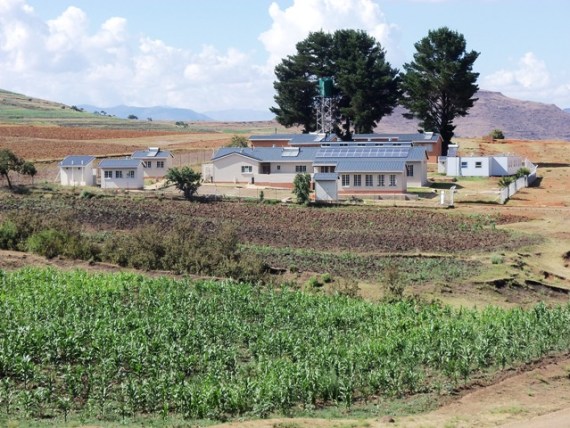
I woke up at 4:20 a.m., excited and anxious about working on a construction project with a local contractor from my rural village in Lesotho, and his team of workers.

I kept my fingers crossed there would be no glitches, and that we’d buy all the materials at the Basotho equivalent of  “Home Depot.” After that, I’d offer lunch to everyone at KFC in Maseru, and then we’d drive back in the rented truck and reach my school by early afternoon. That was my plan.

‘M’e Mamoshaka, a teacher at my school asked me to head over to her house at 6:15 a.m. She likes to sleep late, so I was pleasantly surprised to find her up and dressed. She was frying frankfurters in oil, and wrapped them in two slices of bread and stuffed them in her purse. As we headed out the door, she tossed her empty water canteen to a woman who happened to be heading to the village tap, pushing empty canisters in a squeaky wheelbarrow. I still don’t understand how serendipity works in the Basotho culture. Their timing is perfect, while I’m always struggling with my American time schedule.

Just as we boarded the taxi at 6:33 a.m, the woman handed over the filled water canteen to ‘M’e Mamoshaka, and my contractor, Ntate Makae, magically appeared twenty seconds before our taxi van stopped by his house.

As we headed towards the main taxi rank in Maseru, traffic built up reminding me of the bumper to bumper traffic on the 5 freeway in Los Angeles. The only difference here is that when drivers get impatient, they pull over to the opposite side of the street, and drive on the sidewalk, against traffic. Are you kidding! The driver dodged cars heading straight towards us, as pedestrians jumped for safety. When we finally reached Maseru taxi rank, we headed over to the “Salman” hardware store. The store clerk hand wrote each item we needed, and I soon realized this was no “Home Depot.” After thirty minutes, I pulled out my bank card and paid.

Suddenly, two young men joined us, and I found out that they were here to work with Ntate Makae, so now I believed everything was under control, and well-organized by my contractor.

Co
The Team

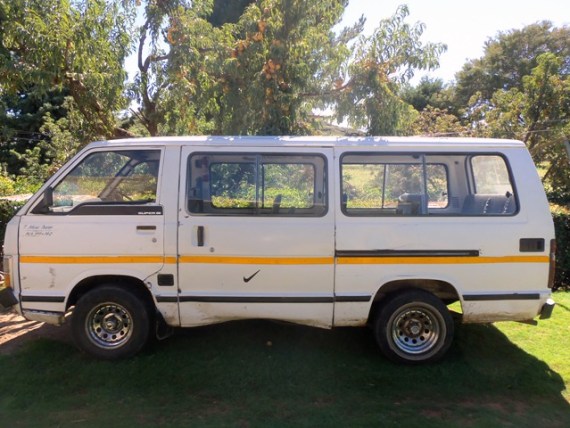
An old, beat-up truck pulled over, and a burly man gestured to ‘M’e Mamoshaka and myself to get in the front seat. At first I wondered how all five of us, plus the driver would fit inside, but I’d forgotten that in Lesotho, you can sit in the truck bed without getting arrested.

We headed over to City Lights to purchase the electrical items on our list, but my contractor had forgotten to add a meter box and the extra lights for 11 classrooms.

This time, my bank card was declined, and I panicked. I called the Peace Corps office to ask for advice, and they told me to go to my bank, and get the cash out. I was not keen on carrying cash on the streets of Maseru, but that seemed to be the only way.

So we asked the burly truck driver to take ‘M’e Mamoshaka and me to the bank. His truck wouldn’t start unless it was put into gear and pushed, or faced downhill. We finally got moving, and I started shaking my head when I saw at least 100 people waiting in line outside the bank. The line snaked around the building and I realized there was no way we could stand here. We would waste the whole day to get to the front of the line.

‘M’e Mamoshaka said, “Follow me.” An older woman stood at the information counter, and even she had about ten people waiting to talk to her. ‘M’e Mamoshaka grabbed my elbow, “Wait here.”

As soon as the older woman was free, she asked me to explain my dilemma.

“I will put you in this line today,” the woman said. It was a shorter one with around twelve people, “but next time you have to go to the end of the line.”

I thanked her, and then counted the people in front of me. Two hours later, I was about to strangle someone. I started doing leg lifts, shoulder raises and calf raises, as the blood in my body had stopped flowing. The line barely moved, and with only three cashiers for 100 people, many of them cutting in line, my patience had become non-existent.

When I finally reached the cashier, he asked me for my passport, which I didn’t have with me. I’m always scared it will get stolen in Maseru, and I only take it when I’m crossing the border to South Africa.

I had my California driver’s licence with a photo, and my Peace Corps ID with a photo as well. He didn’t seem to allow either one, until a Supervisor came by and allowed the transaction to proceed. I was just about to explode, and that would not have been a pretty sight.

Our driver stood outside smoking a cigarette. He had positioned his truck facing downhill, so he could jumpstart it.

We returned to City Lights, and I took the cash envelope and requested permission to go behind the burglar bars to count the cash. I’ve never paid for anything with this much cash, and meanwhile, the men loaded the truck.

2-guys
Construction guys helping with electrical

Stupid me kept thinking this truck was a temporary one, and we would transfer everything into a much larger truck later on. I also believed that ‘M’e Mamoshaka and I would have a comfortable seat in the bigger truck, but it wasn’t until we stopped to collect thirty-one, 6 metre (20 foot) wooden rafters, and six 50-kg bags of cement, that I realized Ntate Makae was planning to use this old-piece of shit truck.

Everyone was starving, and I’d told everyone we’d stop for lunch, but they insisted on getting the truck loaded.

Five men sat on crates in the warehouse, doing nothing. We waited thirty minutes, while the truck driver said he needed to fetch gas in a jerrycan. He asked me for money, to buy gas, and we had barely driven anywhere, but he claimed his tank was empty from taking us to the bank.

“He lying,” Mamoshaka said.

“Lets go to KFC and get a private taxi to take us home after that,” I whispered in ‘M’e Mamoshaka’s ear. I had visions of this truck not making it up the mountains to my village, and the guys at the warehouse hadn’t budged in the last thirty minutes from their crates.

A private taxi picked us up after lunch, and we headed back to our village in the mountains.

Afternoon traffic was getting heavy as it approached 4 p.m. I wondered if the truck had left yet, so we called and Ntate Makae who told us they were almost on their way.

‘M’e Mamoshaka and I got home at 5:45 p.m. It was still light and we called Ntate Makae again and he said they were close to my village.

By 7:30 p.m., they were having trouble climbing the mountain; the load was too heavy for the crappy truck, so they were stuck. They had to call a teacher from my school who arranged for a second truck.

It wasn’t until  9 p.m., that I received a call to say they had made it.  Dressed in my pyjamas, I asked Mary my host “mother”  to come with me. I carried my solar light, as I cannot see a damn thing in this rural darkness.

I pointed the light at two trucks outside: one large one, and the small, dilapidated one. All of the heavy stuff, including all the wood, had been transferred to the large truck, which I later found out belonged to one of my teachers at school.

Quite proud of myself for taking the private taxi home, rather than waiting for the truck to make it to my village, I was able to go to sleep and feel satisfied that the team could start work on the following day.

Please Help Me Raise $5,000 to Make My School Safe

October 13, 2016 by Sonia Marsh 2 Comments

us_5000_1934_federal_reserve_note

I need your help to raise $5,000 to improve the safety and education of students at my rural school in Lesotho, Africa.

CLICK HERE TO DONATE TO MY PROJECT IN LESOTHO

(Scroll Down Until You Reach S. Marsh)

All donations are sent through the Peace Corps and are

TAX DEDUCTIBLE DONATION

Your donations will go through the Peace Corps Partnership Program funds website.

My community has agreed upon the following 3 priorities to help our school.

compound-noun-classroom-working
Collapsed ceiling in Grade 5

1). Make a safe classroom environment for 5th grade students.

Half the roof and ceiling collapsed in July, due to the unusually heavy snow storm, and I’m worried about our safety.

Students want to learn computer skills

2). Electrical wiring of all classrooms to teach computer skills.

My village now has electricity, however, the classrooms have not been wired due to a lack of funds. Since we received four desktop computers from the Minister of Energy, the teachers and students would like to learn how to use them.

Cracks on cold cement floors in classrooms

3). Install vinyl tiles on the floors in all classrooms.

Only the staff room and grade 7 have vinyl floor tiles, all other classrooms have cracked, cement floors which are icy-cold in the winter, and hazardous throughout.


I’d like your help to raise $5,000 and get the work completed by November 30th, 2016, before the Christmas holidays.

CLICK HERE TO DONATE TO MY PROJECT IN LESOTHO

(Scroll Down Until You Reach S. Marsh)

All donations are sent through the Peace Corps and are

TAX DEDUCTIBLE DONATION

PLEASE SHARE WITH OTHERS WHO MAY BE INTERESTED IN HELPING.

The children, teachers, community (AND ME) are all extremely grateful to you for helping us make the school a better place.

I shall post updates and photos once we receive the funds, and start the 3 phases of the project.

You can also follow our progress on my FaceBook  if you’d like.

THANK YOU SO MUCH.

Sonia


Is Medication Overprescribed in Lesotho?

September 18, 2016 by Sonia Marsh 7 Comments

medicine


After living in Lesotho for almost a year, I have experienced two cases of overprescribed medication and agree with the results of a new study that shows that:

“Doctors in sub-Sahara Africa generally prescribe more drugs than the number recommended by the World Health Organization.”  published in the BMC Public Health Journal,

I have experienced two cases of individuals who were given 4-5 medications, and one injection for:

1). A cold

The seventeen-year-old daughter of my host family during Peace Corps training woke up with a cough, and what appeared to me to be the common cold. She did not want to miss school so on her way, she stopped at one of the new clinics built by American donor funding, and was given five plastic bags of different medications, including an antibiotic, plus one injection.

The following day, I asked her if she felt better, and she said, “No.”

I asked her if she saw a doctor, and she replied, “There are no doctors at the clinic.”

2). Allergies/Hay fever

A fourteen-year-old girl at my school could not keep her eyes open during my English class. She said she had allergies and both eyes were swollen with tears streaming down her cheeks. She used her sleeve to wipe them away.

I could tell she was in pain, and asked if she had medicine to take.

“Yes, teacher,” she said. “The clinic gave me an injection and four medicines.”

“Aren’t they helping?”

“No teacher.”

“Come with me and I’ll give you some drops to clean your eyes.”

“Thank you teacher.”

She told me she lived with her grandma, and as I held onto her elbow so she wouldn’t trip over the rocks, I wondered if she was an orphan.

“Here put on my sunglasses.”

She could barely open her eyes, and I wasn’t sure whether to speak to her, or to remain quiet during our fifteen-minute walk home.

Inside my rondavel, I told her to lean back on my pillows so I could place a few drops of “Refresh tears” into her eyes, to flush out any pollen, or other irritant.

She didn’t seem to feel better, so I gave the special Milky Way bar I’d been saving for when I needed to give someone a treat. As with all children at my school, they rarely get candy, so she nibbled it so it would last.

She sat on my couch looking miserable. I found my Peace Corps medical kit wondering if I had any medication for allergies. I’d forgotten I had antihistamines, and was so happy to give her a few pills. She took one, trusting me completely, and after twenty minutes or so, her eyes were dry. They still hurt, but she wanted me to show her my photos on my laptop. I was so happy to make her feel better.

3). High blood pressure

american-built-clininc
Donor Funding by Millenium Corporation

I visited a beautiful clinic built with American donor funding. I was invited to speak to the nurses, even while they were attending to patients.

A woman needed her blood pressure checked to renew her medication, and the nurse told me:

“The blood pressure cuff doesn’t work; the batteries are dead.”

“Don’t you have a manual one?” I asked.

“No.”

At least fifteen patients lined up for their small plastic bags of pills, which are then put into a brown paper bag. When I asked my host mother if the person counting the pills was a pharmacist, she replied,

“No. She just helps.”

I listen to BBC World News daily, and on August 22nd, 2016, (Scroll down) they talked about the study published in the BMC Public Health Journal, which stated:

“A new study has found that doctors in sub-Sahara Africa generally prescribe more drugs than the number recommended by the World Health Organization. 

The study, published in the BMC Public Health Journal, reveals that a patient seeking treatment in the region is likely to be asked to take more medicine than they should ideally be given leading to misuse or overuse of drugs.

The researchers also found that half the time, one is likely to be given an antibiotic, often, without being tested.”

From the three examples I’ve come across, this is happening in Lesotho, and as far as the clinics I’ve visited, there are no doctors, only nurses, and the one time I saw the woman dispensing medication, she was not a qualified pharmacist.

This is a huge problem as far as I can see, not only in terms of a waste of “free” medication, but also dangerous to the patients, in terms of adverse effects.


Online Dating: My Coping Mechanism for Boredom

August 28, 2016 by Sonia Marsh 11 Comments

Sonia dating-3

The Peace Corps warned us that boredom and loneliness may cause a problem at times, and asked us to think of some coping mechanisms. I came up with a new one: online dating.

My days are busy with teaching, but evenings and weekends can become quite lonely, and boring in my rural village in Lesotho. It’s quite common for Peace Corps Volunteers (PCVs) to get depressed between months six to nine of service. We were shown a graph depicting the highs and lows experienced by PCVs during our ten-week training session.

Apart from spending time with my “host mother” and other activities such as lesson planning, writing my blog, reading, e-mailing, talking to family and friends on WhatsApp, knitting, drawing, walking, cooking, cleaning and hand-washing my clothes, I’ve added online dating as another form of entertainment.

The winter months can be brutal here in “The Mountain Kingdom,” where the sun sets at 5:20 p.m., and there is no heating, so I snuggle up in my sleeping bag and prop my laptop on top of my pillow, making sure the battery is fully charged.

I’m a realist knowing that my online dating will stay online. What man would seriously consider flying all the way to Lesotho to my rondavel out in the boonies? In a sense I’m not dating but simply “networking.”

So how can online dating be entertaining? If you’ve never tried it, let me share some of my experiences, and warn you about potential scammers.

“With 54 million single people in the U.S. 49 million have tried online dating, that’s 90% according to statisticbrain.com.”

Since I’m cheap, especially on my PC stipend of $150/month, I refuse to pay for online dating services, until I move to a country where I can actually meet someone in person. So I’ve joined free sites, and hope that I might be lucky enough to find a man who means what he says.

From my collection of e-mails, a striking pattern has emerged. Apart from that one man who said, “I’ll commit suicide right now if you don’t tell me why you’re not interested in me,” the other men all claim to be engineers, military guys, and quite shockingly, they all seem to have lost their wife to cancer, or a car accident.

At first, I felt sorry for them, but after receiving similar stories, I realized they were scammers preying on women who might fall for their sob-stories.

I compared notes with another PCV in Lesotho, my age, who is also online dating, and she said these men post photos of handsome men, who are not them, and after a while, ask you to send money. (Might that be a new version of the infamous Nigerian scammers?) They make up some excuse like their son or daughter needs surgery, or they lost their business. This has not happened to me yet. I usually quit writing immediately. So now when I receive a FB friend request from a man who says:

“Hi Sonia , how are you doing ? thanks for accepting, I do really appreciate  , can we get to know each other better if you don’t mind? my name is A …” (My reply.)

“We can, as long as you don’t tell me that your wife died and that you are lonely. I ‘ve received at least ten messages from military men and engineers who state the same thing.”

When they don’t respond, I know they were like the others I received.

I joined a travel dating site, as I’d like to have a male travel companion to tour Africa, and noted that many of them are over 75. I’m sorry, they may be great men, but I want someone closer to my age for travel and adventure.

Some guys can be quite funny:

“Hi Sonia, how are you ? I like your comments & would like to travel with you ! How can we do this, shall I approach it like a job application ? HaHa please see my profile & CV / Referees on linkedin . LOL G.”

I’m not a professional editor or proof reader, and admit that I make mistakes in my writing, however, dating scammers seem to have:

  • Bad grammar, (especially when the person tells you that he has a Masters degree, and attended a private high school in Monaco.)
  • Use lower case (i)
  • Use run-on sentences
  • Do not indent their paragraphs
  • Offer false information like, “I own a diamond mine in Botswana.”

I won’t give-up. I am human after all, and know that one day, I’ll find the “right” male companion, whether online, or in-person.

In the meantime, I might just continue online dating for entertainment, although now I have a new focus which you’ll hear more about next Sunday: My Community Development Project, and how I’m pushing it along.

Do you have any similar online dating experiences? If so, please share them.

My First Basotho Funeral

August 7, 2016 by Sonia Marsh 3 Comments


The traditional Basotho blankets
Mary and Sonia in their traditional Basotho Blankets

It’s very sad but there seems to be at least one funeral every Saturday in my village in Lesotho, Africa, and I experienced my first Basotho funeral yesterday.

My counterpart, the 7th grade teacher at my school, lost her husband to TB. He was only 37.

Funerals are important community events in Lesotho, and I’ve become aware of the multiple billboards in the capital city, as well as the ads on local television for funeral insurance.

It seems that even the poor, spend at least 10,000 Rand, or $700 on a funeral, and that is a ton of money for a family that cannot feed itself. I admit, I’m not familiar with the details, however, my first Basotho funeral, was elaborate, with numerous priests, a choir, and a brass band.

Mary, my host “mother,” wanted me to wear the traditional Basotho blanket, and I’m glad I did, as it was important to fit into the community.

Numerous tents were set up in the compound where my teacher and her mother-in-law live, and women were busy breaking twigs to keep the fire going under the cast iron pots.  They prepared a traditional meal of beef, samp (like hominy), rice, carrots and beetroots, to feed everyone after the service.

Cooking food for the funeral congregation

Lines of buses and cars flocked the dirt road, and Mary and I arrived a little late, at 10:30.  The grieving wife and mother-in-law, sat on a mattress, next to the coffin, and at one point, the wife covered her entire body and face with the blanket.

When she spotted me, she gestured for me to come and sit next to her on the mattress. I was embarrassed, as I had to walk in front of the entire congregation, including the choir and the priests to reach her.

“Can you please take photos of the coffin and my husband’s photo,” she said. “I do not have a camera.”

Casket with photo
Casket and priests

Her husband’s framed photo sat on top of the casket, with a bouquet of artificial flowers propped up next to his picture.

I did what she requested, but being the only white person in the entire congregation, I felt conspicuous, especially acting like a paparazzi standing in front of the coffin.

A man distributed the folded program listing the names of the speakers at this Basotho funeral, and I had no idea this would be an all-day event.

The choir sang intermittently while the brass band played, and everyone stood, swaying to the music. I watched my teacher in tears, and it seemed more like a festive celebration for the attendees, while she sat, distant and numb, in her own thoughts.

Click here to listen to choir singing.


Choir, ladies all in the same blankets
Brass Band

After everyone had spoken, we followed the pallbearers up the hill where the casket was laid to rest in the ground. Two beautiful marble headstones were unveiled, while mourners sobbed at the graveside.

Congregation walking to burial site
Standing in front of the burial site
Headstones

“Let’s go home,” Mary said.

I was expecting us to go back to my rondavel, but then Mary said, “We need to wash our hands.”

She led me back to the tent where the food was displayed in various oversized plastic bowls.

Choir Ladies getting food

“Follow me. We have to wash our hands first,” Mary said.

She showed me what to do. I had to bend over a plastic tub, scoop cold water into my cupped hands and throw the water onto the dirt, so as not to contaminate the water in the bowl.

Mary washing hands before our meal at Basotho Funeral

With wet hands, we proceeded to get a plate of food.

Mary was proud of me wearing her blanket, as her friends complimented her on the way I looked. It means so much to the Basotho when you wear the same as them.

The funeral ended around 4:30 p.m., when the choir ladies boarded the bus, and the brass band, priests and local chief, headed home. I asked Mary if this was a traditional Basotho funeral, and she said yes, apart from the brass band. That was different.

I cannot imagine attending a funeral every Saturday, however, when I ask the teachers at my school how they are spending the weekend, I often get the following response, “I’m going to a funeral.”

« Previous Page
Next Page »
  • Facebook
  • Instagram
  • LinkedIn
  • Pinterest
  • Twitter
  • YouTube

Sign up for my Gutsy Updates

Sign up to receive awesome content in your inbox, every month.

We don’t spam! Read our privacy policy for more info.

Check your inbox or spam folder to confirm your subscription.

Welcome to My New Life

Welcome to My New Life

Do you feel trapped?
Let me Help You Rediscover Your Freedom.
I divorced at 58, and now belong to myself.
If I can do it, so can you!
Let me help you find your purpose and become your own best friend.

Click the cover to buy on Amazon

Recent Posts

  • Do You Really Want to Live to 120? The Truth About Healthspan vs. Lifespan
  • I’ve Forgotten How to Drive — My Tesla’s Drives Better Than Me
  • Why I Quit Dating Apps at 68—And My 35-Year-Old Son Has the Same Problem

Also Available At:

Latest from the blog

  • Do You Really Want to Live to 120? The Truth About Healthspan vs. Lifespan
  • I’ve Forgotten How to Drive — My Tesla’s Drives Better Than Me
  • Why I Quit Dating Apps at 68—And My 35-Year-Old Son Has the Same Problem
  • Solo Cruising Doesn’t Mean You’re Alone
  • Single Woman Cruising Solo

Top Posts

  • Do You Really Want to Live to 120? The Truth About Healthspan vs. Lifespan
  • My Experience Working With A Contractor in My Village In Lesotho
  • Do I have to fit into society's expectations?
  • How to use the restroom in a French Starbucks
  • "My Gutsy Story" by Pamela Sisman Bitterman
  • Privacy Policy

Copyright © 2026 · Beautiful Pro Theme on Genesis Framework · WordPress · Log in

Loading Comments...