Sonia Marsh - Gutsy Living

Life's too short to play it safe

  • Home
  • About Sonia
  • Blog
    • Starting Over
    • Solo Cruising
    • Travel & Adventure
    • Peace Corps
    • Writing & Publishing
  • Books
    • Freeways to Flip-Flops
    • My Gutsy Story® Anthology
  • Media
    • Press Kit +Videos
    • Print Media
    • Awards-Reviews-Testimonials
    • Sonia’s Blog Tour
  • Contact
You are here: Home / Archives for People

“My Gutsy Story®” Linda Joy Myers

January 28, 2013 by Sonia Marsh 41 Comments

Linda Joy Myers

I AM Your Daughter

 I yearned for her all my life, couldn’t take no for an answer, used to the snaking line of her hose on the back of her legs as she jaunted toward the steaming train, the sharp edges of no and don’t get too close in her voice. All my life, I believed one day she’d wake up and see that I was a loveable daughter. One day she’d open her arms and welcome me into her heart.

When I was five we lived with her mother, my grandmother. One day, Mother announced that she was going back to Chicago without me. Through the years when I lived with her mother, Gram, in the middle of a fight mother would pack up her bag and run out the door to a cab.

A born peacemaker, I courted my mother’s approval. She’d given no signs of her disavowal of me until I was twenty, she visited once a year, but were her visits as much about seeing her mother, who had left her when she was six, as seeing me? Though Gram reclaimed mother after she remarried, they were always in conflict. After those abrupt endings that should have been happy reunions, Gram would sob, “Oh, my brown-eyed baby. Why can’t she just get along? Why can’t she…” Other times, Gram’s dark eyes stormed with rage at mother, long hours of diatribes against her. I didn’t know who to feel sorry for—Gram or mother. Or both.

I first visited my mother when I was twenty years old, having left Oklahoma to attend the University of Illinois. What a thrill it was to be in the city of my birth, the city my grandmother had moved to when she left Mother behind. Thrilled to be with her that first winter day, gasping against the wind, I rushed with mother to a jeweler’s where she traded antiques. On the way, she said, “Just wait for me and don’t talk.”

I knew that displeasing her could result in serious consequences, from being screamed at, torn down with criticism, or even slapped, so I nodded. For nearly an hour, miserably invisible, I hovered by the door at the end of the counter while mother flirted with the owner. Finally mother’s lilting voice,  “You see that girl down there. That’s my daughter.”

Her hips swiveled and she flashed a flirty smile as he said, “That’s impossible, you’re not old enough to have a daughter that age.”

I straightened up, ready to be proudly introduced after all, only to shrink back when she whispered, “Oh, really?” pleased to be seen as so young, ignoring me for another half hour.

When we left, I found the courage to ask why she didn’t introduce me.

“I have my own life here, and no one knows I’ve been married. So of course I can’t have a daughter, can I? I don’t want you ruining things for me.”

As I shuffled behind her, ashamed, small, confused, I didn’t know that I’d spend the next thirty years trying to get her to change her mind. I’d bring my children to see her in Chicago only to have her shepherd us down the back halls of her hotel away from view. I was always excited to go to Chicago, always hopeful she’d be different.

One visit in particular was a tragic example of her attitude. Standing in the elevator of her hotel, she looked me up and down. “You look like me. I hope no one thinks you’re my daughter.” In stunned silence that she would say such a thing, I watched elevator buttons blink, almost gasping for breath, feeling stabbed in the stomach.

After another visit being shuffled through back hallways, my eleven-year-old son said to me, “Why do you bring us here when she doesn’t want us?” He was much smarter than me.

“We’re never coming back.” I resolved, my dream infusing with reality.

But I was too cowardly to confront her. Her irrational outbursts and violence frightened me too much to try. That night, I howled my rage and tears, knowing that my dream of being welcomed by my mother would never come true.

Four years later, after no contact, she called, terrified about a brain tumor and lung spot. Would I come? I flew out that day. We arrived at the hospital where a nurse checked her in.  She glanced at Mother and then at me. “You must be her daughter,” she said to me.

“Yes,” I said, holding my breath. The nurse didn’t know mother’s crazy rules.

A beat, then a shriek, “Don’t tell them you’re my daughter!!”

The nurse froze, the woman in the next bed gasped. Calmly, I said, “Mother, you know I’m your daughter.”

Though I knew she was disturbed, and by now could see that she’d never stop denying me, I couldn’t prevent a tear rolling down my cheek.

Over those days I sat next to her hospital bed, the extent of her denial became even clearer: her attorney of fifteen years didn’t know I existed. On a day when friends were to visit, she told me,
“Come back in two hours. I don’t want questions about you.”

Stung, I shuttered myself as always, comforted by Van Gogh landscapes and Monet flowers at a nearby museum. On the way back, my rage built, along with shame at my own cowardice. I found her pacing, screaming accusations, criticisms; finally my silence broke: “Mother, you’ve denied me my whole life! I’m sick of it. I came here for you, left my children to be with you. I’m your daughter!!”

A small voice murmured, “When did I do that?”

I could have listed all the times she turned away, denied me, hurt me. But suddenly, beside me was a just a dying old woman. I put my arm around her. “It’s okay, Mother. It’s okay.”

In peace, we watched raindrops splash spring rain on the greening trees.

DCMM Cover Rev5.indd

Linda Joy Myers:  President of the National Association of Memoir Writers, & Co-President of the Women’s National Book Association, SF, is the author of The Power of Memoir—How to Write Your Healing Story, and a workbook The Journey of Memoir: The Three Stages of Memoir Writing. A new edition of her memoir Don’t Call Me Mother—A Daughter’s Journey from Abandonment to Forgiveness was released in January, 2013. She co-teaches the program Write your Memoir in Six Months with Brooke Warner. She coaches writers, and offers teleseminars and workshops nationally.

Linda has won prizes for fiction, memoir and poetry: First Prize, Jessamyn West Fiction Contest; Finalist, San Francisco Writing Contest for Secret Music, a novel about the Kindertransport; First Prize, poetry, East of Eden Contest, and First Prize Carol Landauer Life Writing Contest. www.namw.org.  Blog: http://memoriesandmemoirs.com

Sonia Marsh Says: Linda, you transported me into your life as a child, a young woman and finally a mother yourself yearning all your life for your own mother’s love, approval and recognition. I felt your hurt and anger throughout your story and your ability to forgive makes your story so compelling. Thank you so much for sharing your story, and congratulations on your new edition of, Don’t Call Me Mother.

 ***

Do you have a “My Gutsy Story®” you’d like to share?

NOW is the time to submit your “My Gutsy Story®” and get published in our Anthology. Please contact sonia@soniamarsh.com for details.

You can find all the information, and our sponsors on the “My Gutsy Story®” contest page. (VIDEO) Submission guidelines here

VOTING for your favorite January 2013 “My Gutsy Story®” starts on January 31st, and ends on February 13th. The winner will be announced on February 14th. We have a new sponsor, Carolyn Howard-Johson, who is offering her e-book as a prize: The Frugal Editor.

Please check out the following January “My Gutsy Story®”

  • Mary Gottschalk
  • Christine Lewry
  • Michael Jay

How Do I Sell My Book?

January 24, 2013 by Sonia Marsh 28 Comments

Booksigning
Sonia Marsh Book Event at Bank of Books in Ventura, California.

How do I sell my book? I want to make money now?

So you’re anxious to make money but acting desperate is not the way to sell books.

What if I told you that you should not focus on  “making money” but on building relationships instead, would you think I’m crazy?

Just like finding the “right” guy—I’m speaking to the single ladies out there—acting desperate is a turn-off. You don’t want to beg and grovel, but you want to come across as proud and confident of your “product”. Oops, did I say, “product?”

So my first question to you is:

Are you proud of your book, I mean really proud? Is this a book you could pitch to the President of the United States, or the first lady with excitement and passion in your voice?

If your answer is “yes,” then I have good news for you:

When you have a great “product” and believe in your work, you can sell it, why? Because it will sell itself.

According to a panel of agents on Barbara DeMarco Barrett’s show “Writers on Writing,”

Indie-published authors have to set the bar higher than traditionally published authors. They have to go “high-end” with their book covers, and their book must be perfectly edited.

These agents pointed out the importance of having an amazing cover and that there are no excuses for a book cover that looks self-published.

I agree with the agents and outsourced my book cover and formatting to a professional company that specializes in book design. I’m proud to recommend 1106 Design.

Now you can move on to the following.

The key to sales is not just one thing, but a mixture of many, which I discovered in the The Frugal Book Promoter, by PR expert Carolyn-Howard Johnson

As she mentions in her book,

BIG WORRY NUMBER SIX: Fear of Marketing. The most pressing fear of all seems to be the fear of marketing.

Here is what I recommend for selling your book. Follow all 3 E’s

  1. Enthusiasm
  2. Effort
  3. Entrepreneurship

We’ve all heard that “word of mouth” sells books, and I believe it starts with a grassroots approach. So how do you start?

The answer lies with connecting and caring about people, not just when your book is published, but long before that.

Develop friendships with:

  • famous authors
  • less famous authors
  • editors
  • agents
  • fellow writers
  • your local journalists (via social media)
  • publicists
  • bloggers
  • book store owners
  • and volunteer at your library, especially if they offer an author program
  • volunteer at writers associations

Marketing is about getting to know people and developing meaningful relationships.

The more people you get to know, the more you can tap into your contacts and ask about:

  • Speaking at various groups (libraries, networking groups)
  • Get sponsors for your book signings and maybe even your book tour
  • Ask your local coffee shops and other businesses if you can do book signings at their location.
  • Help promote other businesses at the same time as your own events
  • Helping others (for example giving a % of your book sales to libraries, to non-profits.)
  • Attending events that interest you so you can meet new people and get ideas
  • Contacting MeetUp groups online and asking if you can speak at their next meeting
  • Start talking to people while standing in line at the supermarket, post office, you never know if they are in a book club etc.

One easy way, is to strike up conversations with people you meet and tell them about your book. Now I don’t mean being obnoxious and saying, “I wrote a memoir and if you go to Amazon you’ll find it.”

I live in a suburban area, and bump into people I know at the supermarket, coffee shops and my gym. I’m good at remembering faces, even after twenty years or so.

The other day, I shopped at Trader Joe’s and bumped into a lady I remembered from somewhere. With a smile, I pushed my shopping cart towards her and said, “Hi, where do I know you from?”

“The gym,” she replies.

“I haven’t seen you in a while, do you still go?”

“I changed to the Aliso Viejo gym,” she said, “I like their cardio equipment there.”

“What about you?” she asks.

“I still workout at the same gym, but I’m so busy now since my book was published.”

From there on the conversation turns to my book, what it’s about, and she asks me where she can purchase it, I hand her a bookmark and my business card, and say, “My e-mail is on my card, and I’d love to hear what you think of it.”

I admit, it’s been helpful to get media coverage as people respond better when I tell them I was interviewed on the front page of the OC Register and how my book was labeled a “Hot Read” in OC Metro.

I then ask whether she belongs to a book club, and how I am going to a book club on Friday evening and have another one next week.

“I love answering questions, so please contact me and I shall be happy to come to your club.”

One final piece of advice

Be Patient.

Now if you know me, you’re laughing your head off as I tend to want things done right away. My husband jokes that I’m one of the most impatient people he knows.

Finally, you can always hire a PR person to do the work for you, but you still need to be enthusiastic and interact with your readers, often at public events  if you want to sell books.

What has worked for you? Please share.

Do you have a “My Gutsy Story®” you’d like to share?

NOW is the time to submit your “My Gutsy Story®” and get published in our Anthology. Please contact sonia@soniamarsh.com for details.

You can find all the information, and our sponsors on the “My Gutsy Story®” contest page. (VIDEO) Submission guidelines here

VOTING for your favorite January 2013 “My Gutsy Story®” starts on January 31st, and ends on February 13th. The winner will be announced on February 14th. We have a new sponsor, Carolyn Howard-Johson, who is offering her e-book as a prize: The Frugal Editor.

Please check out the following January “My Gutsy Story®”

  • Mary Gottschalk
  • Christine Lewry
  • Michael Jay

Next Monday, we have Linda Joy Myers “My Gutsy Story®”


The Used Car From Hell

January 17, 2013 by Sonia Marsh 15 Comments

100_0754
The Used Car From Hell

“Mom, my car just died,” Josh, my eighteen-year-old son texted me at 4:37 pm, last Monday.

“Where are you?”

“About 80 miles outside Phoenix. Not sure. No signs.”

Why the hell didn’t my husband return this damn car to the dealer?

Duke said he test-drove it, checked the various things you’re supposed to check on a used car, and on the 50-mile drive home, the oil-change light flashed bright red.

To me that’s a clear message: “Warning, I’m a problem car. I just pretended to work while you drove me a couple of miles around the dealership.”

So Duke drove this 2003 Nissan X-Terra, with 60,000 miles on it, straight to Don, our mechanic in Orange County.

Don checked the oil and flushed the engine, which happened to have metal shavings in it.

I don’t know much about engines, but metal shavings don’t sound healthy in your engine.

“Drive it around for a couple of hours and I’ll flush the engine again first things in the morning,” Don said.

At least Josh will get two hours of training on how to drive a stick shift.

Did I forget to mention this car has a manual transmission, and our son has never driven a stick shift before?

As with many decisions in our family, we tend to procrastinate; then at the last minute, we take action. It’s not like we hadn’t looked at car ads during the Christmas holidays; we just hadn’t found anything affordable, with low mileage. Plus Josh wanted a used truck with a V8 engine, to which Duke and I said, “Absolutely not.”

I offered Josh my 2007 Kia Rio, with 67,000 miles, but my husband agreed my car was not suitable for driving long stretches in New Mexico where powerful gusts of desert wind can lift your car off the road. How do I know? I rented a Kia Rio just like my own when I visited Josh, and my rental almost blew off the road to Roswell. Perhaps the aliens saw me coming, who knows.

The following morning, which happened to be the Friday before Josh’s National Guard training, Don opened his garage early in order to flush the engine one more time before Josh headed out.

I climbed onto the passenger seat and asked Josh to practice changing gears down our street. I wanted reassurance before his 800-mile drive.

My first impression was not good. A musty smell hit my nostrils and a collection of crumbs, dry grass and other stuff you find underneath your shoes covered the gray floor mats. How come the dealer sold a dirty car? Hadn’t Duke noticed?

Josh turned on the engine and it sounded like an old smoker clearing out his lungs. He tried to press down on the clutch, and put it into first gear, but he couldn’t.

“Let me try,” I said.

We changed seats and I had the same problem. The gear wouldn’t engage.

I ran inside for assistance. Duke was getting dressed for work.

“Looks like the clutch is gone,” Duke said.

He succeeded in thrusting the stick-shift into second gear and I followed him to Don’s shop in my reliable Kia Rio.

“The clutch could probably have lasted another year, but with Josh learning how to change gears, I’m not surprised,” Duke said. “Book him on a flight.”

I debated whether or not to book Josh on a flight. He desperately needed a car to get to his training, plus the freezing temperatures and icy road conditions, made riding his bike hazardous.

Don said it would take all day to replace the clutch, and re-flush the engine.

“I’ll leave tonight,” Josh said.

The car was ready for pick-up at 6pm. I met Duke at the repair shop and almost fainted at the cost of a new clutch.

“Aren’t you going to call and yell at the dealer?” I asked Duke. “Ron says we have 72 hours to return the car, and since it’s a piece of crap, we need to return it now.”

“It’s all fixed and ready to go. Josh can leave tomorrow morning and I’ll call the dealer over the weekend.”

Josh insisted on leaving right away, but we managed to convince him to leave the following morning.

Josh programming his GPS

I packed enough water bottles to last him a week, a turkey, cheese sandwich, three apples and five protein bars. Josh climbed inside his car, programmed the GPS on his phone—at least that reassured me a tad—and as I waved goodbye, my son tried his best to make a smooth start in first gear. I felt a sense of relief, knowing he had a GPS and AAA.

Six hours later, Duke sent me a text message that Josh’s engine wouldn’t accelerate. He pulled over and after checking the oil level, the engine wouldn’t start.

I left Duke in charge.

After several hours sitting in his car, AAA finally showed up from Phoenix. Duke located, and called the closest garage in a town that sounded like Salami, Arizona, where AAA towed his car.

By now, it was after 6pm., and the garage was closed.

“Mom, I’ll sleep in the car,” Josh texted me.

I called him back and his voice kept cutting out.

“Some guy is …. up,” Josh said.

Now, my vivid imagination took over and I started thinking he might get shot.

“We’ll call a taxi to come and pick you up.”

Duke listened to me and rolled his eyes.

“There are no taxis in this small town,” he said.

“What’s the name again?” I asked.

“Salami, or something like that,” Duke said.

I Googled places that sounded like Salami in Arizona, and found Salome.

“Does that sound like the place?”

“Yes,” Duke said.

“There’s a motel and I’m sure they’ll pick him up.”

Duke called the motel, and the owner said, ‘Tell your son I’ll be there in ten minutes.”

Knowing that Josh was now warm and had a bed for the night, I could fall asleep.

“The garage says I need a new engine,” Josh told us the following morning.

What now?

Thankfully, the garage owner’s wife agreed to drive Josh to Phoenix airport where he purchased a ticket to Albuquerque. By now, he had missed his training, and we needed to get the car back to California.

After owning this car for four days, I calculated all the extra money we have spent, and to top it off, we had the extra expense of getting the car back to the dealer in Los Angeles.

“Duke, I hope you give the dealer hell,” I said.

Josh’s car is now back at the dealers, and we’re waiting for a replacement engine.

Who knows how this will end.

Do you have a used car horror story?

Do you have a “My Gutsy Story®” you’d like to share?

NOW is the time to submit your “My Gutsy Story®” and get published in our Anthology. Please contact sonia@soniamarsh.com for details.

You can find all the information, and our sponsors on the “My Gutsy Story®” contest page. (VIDEO) Submission guidelines here

This January we have two stories from Mary Gottschalk, and Christine Lewry. Monday, January 21st, we shall feature Michael Jay’s Story.

Voting for your favorite January 2013 “My Gutsy Story®” will start on Janusry 31st and end on February 13th. Don’t forget to read all 4 of them and vote.


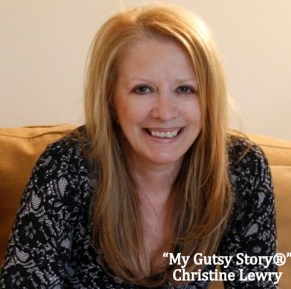
“My Gutsy Story®” Christine Lewry

January 14, 2013 by Sonia Marsh 23 Comments

 Christine Lewry

 “Thin Wire”

I felt the lump again. ‘It’s probably nothing,’ I said out loud. It wasn’t a hard lump but a knot of soft tissue under my arm. A wave of overwhelming doom made my knees buckle, I sat back on the bed.

I rang the doctors’ surgery. ‘Is it an emergency?’ the receptionist asked.

I thought for a moment. Is it?

‘Well … yes,’ I replied. She gave me an appointment for later that day. I wandered about the house, kept looking at the clock, didn’t get anything done.

‘I don’t think it’s anything to worry about,’ the doctor smiled. ‘But I’ll send you for a mammogram.’

My husband, Tony, came with me for the mammogram. We sat in a comfortable pink waiting room and read the newspapers. He made a cappuccino from the machine. The nurse’s hands were round and warm as she squeezed my breasts into the X-ray machine. ‘I’ll show these to Dr Wainwright,’ she said. I got dressed and returned to my newspaper – I didn’t want to look at the frightened faces of the other patients.

‘Doctor wants to do an ultrasound,’ the nurse with the warm hands said.

I lay on a narrow bed while Dr Wainwright squeezed cool gel on my chest and ran the ultrasound probe over it. The room was dark apart from the faint glow from her computer. Shadows fell on the walls like ghosts in the night.

‘There,’ she pointed to a haze of white on the screen. ‘I’ll do a biopsy, then we’ll organise a taxi to take it to the lab.’

Tony stayed home with me until the hospital rang. ‘Very sorry, but you have breast cancer.’ The words sounded so trivial and yet so profound and life changing. I tried to stay positive. Anyway, what could I do? Break down? Scream? I had to hold on tight to the belief that I was going to be alright.

The morning of my operation, Dr Wainwright and the surgeon gathered around my bed. ‘We’re going to do a larger operation than we originally planned,’ Dr Wainwright said. ‘We’ve decided to take the lymph nodes from under your arm, in addition to the lumpectomy. The lymph nodes are used to diagnose whether the cancer has spread outside the lump.’

I signed the form, leaving it to them to do whatever they thought might save me.

The next day my surgeon came to see me. He smoothed out the starched sheet and sat on my bed. ‘I’ve got the results of the lymph node biopsy. I’m afraid it’s bad news,’ he said. ‘Of the twelve lymph nodes I removed, six have cancer. I’ll arrange for you to see an oncologist. I expect he’ll recommend chemotherapy.’

I turned over and stared at the wall, waiting for Tony to arrive. My life was slipping away, like grains of sand falling through my fingers. The thought that I had cancer spreading through my body was terrifying. What if I died leaving my children without a mother? They were so young that there would come a time when they wouldn’t even remember me. I would be that photograph smiling back from the mantelpiece, a sad remnant of a woman who died long ago, never moved or put away since she left.

The oncologist talked in percentages and statistics, about improvements in life expectancy of five or ten years, his voice set in a monotone devoid of hope or compassion. What bloody good was five or ten years? I wanted to live, not wait it out. I wasn’t going to take on his fear or negativity.

The chemotherapy made me feel sick. I tasted its bitterness in the delicate lining of my nose and at the back of my throat. It made me feel like every cell in my body had been poisoned and that I had the most dreadful hangover, yet I hadn’t even had a glass of wine.

Mentally I had to pace myself. Six times, once every three weeks. I could manage that. I counted them off. Still, it was hard for me when all the hair on the top of my head fell out despite the torture of the cold caps. I always did care too much about my appearance.

Christine Lewry hair growing back
Christine Lewry hair growing back after chemotherapy.

‘Do you love me?’ I asked Tony whilst having the pinky-red chemotherapy dripped into my veins. The anti-sickness medication made me constipated for days and I became frail and weak. The more ill I became, the more I thought that if I died he might find a new wife; someone younger, thinner, better than me.

When my treatment finished, I was cast adrift. All the time I had been having hospital appointments, chemotherapy or radiotherapy I had been doing something positive to fight the disease. Now I floated about, waiting to see whether I would sink or swim.

I got myself a wig and went back to work.  The boss came in to speak to me – a rare man who emanated kindness. ‘I had cancer some years ago,’ he said. ‘It changed me, made me a better person. I know it’s hard but you’ll be glad one day you’ve been through this, it’ll change you too.’

I smiled and I looked away. What good could ever come from thinking you might die?

Sitting in my office in the late afternoon, I noticed the rain trickling down the window. The sky was grey and the darkness came on earlier than usual

I thought about what he had said, and realised that cancer had changed me. The whole experience had made me stronger inside, as if I could cope with anything. The money and possessions I had, all the stuff, it meant nothing to me. The only thing that mattered was the people I loved.

I had a feeling that some destiny awaited me; that my life was mapped out in some way, and maybe when that destiny caught up with me, I’d remember about the cancer and things wouldn’t seem so bad.

Christine Lewry Bio:

Christine Lewry lives in Hampshire, England, with her husband and two youngest children. She worked in the defence industry as a finance director for twenty years before leaving to write full-time. Thin Wire: A mother’s journey through her daughter’s heroin addiction (Amazon Kindle US) or (Amazon UK) (memoir) is her first book. She now hopes to write a novel.


Christine Lewry Book Cover


Please visit Christine’s website, follow her on Twitter@christinelewry, and on Facebook, and on Goodreads.

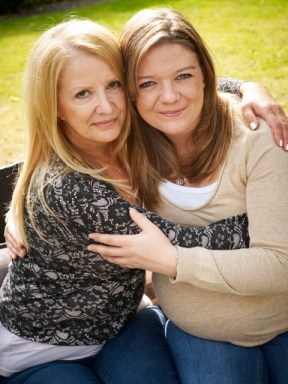
Chritine Lewry and her daughter
Amber, and me now (she’s pregnant in the photo, gave birth to a boy last November and she was the heroin addict)

Sonia Marsh Says: Christine, what an honest and open account of what it’s like to go through the various stages of cancer from detecting a lump, waiting for biopsy results, then surgery and chemotherapy.  I connected with you describing all the emotions you went through during the various stages. Your writing is open and honest and your positive message, made me realize that there are always lessons to be learned from every situation in life, even the ones we fear the most.

Do you have a “My Gutsy Story®” you’d like to share?

NOW is the time to submit your “My Gutsy Story®” and get published in our Anthology. Please contact sonia@soniamarsh.com for details.

You can find all the information, and our sponsors on the “My Gutsy Story®” contest page. (VIDEO) Submission guidelines here


“My Gutsy Story®” Mary Gottschalk

January 7, 2013 by Sonia Marsh 35 Comments

Mary Gottschalk

Welcome to Our New 2013 “My Gutsy Story®”  Series

“Giving Up the Illusion of Control”

“Can’t we just sail around the world now, instead of waiting until we’re retired?”

My story begins with that simple question to my husband Tom, posed on a snowy February night in 1985.

The answer seemed an obvious “no.”  At age 40, we both had successful careers in high finance. My success was all the more significant as a woman in what was still very much a man’s world.  Abandoning the career I’d worked so hard to build seemed crazy.  After five years at sea, I’d be approaching 45 and totally out of touch with the ever-innovative financial markets.  The odds of getting back into that competitive world would be perilously small.

But something didn’t feel right.  Tom and I both worked long hours, week in and week out.  We had no time to enjoy the fruits of our success. Life seemed to passing us by.

And so, Tom and I held hands and jumped off the corporate ladder. Barely seven months later, we headed out of New York Harbor on a 37-foot sailboat en route to the rest of the world.

Almost nothing on that voyage worked out as planned.  But what I learned, as I recounted in Sailing Down the Moonbeam, is that sailing is a metaphor for life. The route is not well marked.  You can’t control your environment.  All too often, you end up somewhere other than where you intended to go.  As Ted Turner famously noted, there’s no point in worrying about the wind; the only thing you can do is adjust your sails.

It was a lesson I learned early in the voyage, and it changed my life almost at once.  But the way that lesson applied to my career was not apparent until years after the voyage ended.  That is the story I will share here.


I began my professional life as a researcher and problem solver for companies with financial exposure to interest rates, currencies and commodity prices. I loved the work, which appealed to my analytical nature.  It seems I was good at it and I moved steadily up the corporate ladder.  But with each move, I was spending more time managing people and their schedules, and less time doing what gave me a sense of satisfaction.  A nagging concern about my ability to master the job I’d been promoted into—I hated routine and didn’t think I was a very good people manager—was a significant factor in my decision to leave on that sailboat.

At the time, I felt I was running away from a looming sense of failure.  But as the analogy between sailing and real life began to rise to my consciousness, it struck me that during those last few years in New York, I’d been trying to control the metaphorical wind … trying to make my career go in a direction that my introverted, analytical persona was not designed to go.

With the realization came an understanding of what I wanted, what I was willing to do— when and if I returned to the work-a-day world. I liked research and problem solving.  I didn’t like jobs with routine and repetition.  I didn’t want to manage people.  I didn’t want to waste energy trying to be good at what other people thought I should do.

With that insight came another. Fancy titles and big salaries mattered far less to me than having an interesting job in which I could continue to learn and grow.  As I thought back over my career, the jobs I had loved most had constant variety with little or no managerial routines, as well as the opportunity to learn even as I used my analytical skills to help others.  It was the classic consultant role.

It was easy enough, sitting on the deck of my sailboat, to say what I wanted.  But what if the world didn’t care what I wanted?

And for a time, it seemed the world didn’t care.  When I did go back to work, I started out as a mid-level financial consultant in Auckland, New Zealand, much lower in the pecking order than I’d been when I left New York.  Within four years, however, I was running the financial risk management practice for Peat Marwick in Australia.  In 1994, Arthur Anderson recruited me to return to New York.  In 2000, I was appointed Chief Financial Officer of one of the twelve Federal Home Loan Banks.

Although I didn’t seek them out, promotions and handsome salaries came my way.  It was like being paid to go to school.  It seems that what mattered was not being good at everything, but focusing my energy and attention on doing what I loved and was good at.


With the benefit of hindsight, a career decision that initially looked like a “gutsy” thing to do seems to have been the safer course of action.  In New York, every rung on the corporate ladder is a stop on the road to somewhere above. If you don’t move up, you’ll get pushed off.  I have no doubt that, had I stayed on that management track in New York, I would eventually have been pushed off by someone who loved managing people in a way that I did not.

My point is not just that I took a risk and it worked out.  My point is also that doing what is expected, following the conventional path may, in reality, be the riskiest choice of all.  We all know people who stayed in jobs they didn’t enjoy just because they thought the job was safe—and lost their jobs in the last recession.

I often wonder what would have happened if I hadn’t gone sailing. Would I have stayed in a miserable job? Perhaps not. But if all I did was change jobs in the competitive, high pressure world of New York, I would not have learned the lesson I absorbed as I crossed the Pacific Ocean … that you can’t control your environment … that you can only control how you respond to it.  Given that reality, you might as well spend your time doing what you love.

Go for it!

 ***

Mary Gottschalk Bio:

Mary has made a career out of changing careers.  After finishing graduate school, she spent nearly thirty years in the financial markets, as an economist, a banker and a consultant.  Her work took her to New York, New Zealand, Australia, Central America, Europe, and amazingly, Des Moines, Iowa.

Along the way, she dropped out several times.  In the mid-1980’s, Mary and her husband Tom embarked on the round-the-world sailing voyage that is the subject of her memoir, Sailing Down the Moonbeam. Several times, she left finance to provide financial and strategic planning services to the nonprofit community, both in New York and Des Moines.

In her latest incarnation, she is working on a novel, writing for The Iowan magazine, and lecturing on the subject of personal risk.

 Mary Gottschalk book cover

Mary has two websites which you can view here and here.

Please join her on Twitter and Facebook, and her memoir, Sailing Down the Moonbeam  is available on Amazon.

***

 Sonia Marsh Says:

“Abandoning the career I’d worked so hard to build seemed crazy,”

and yet, this is what you did. I find it amazing that stepping out of the corporate world into a world where nature is your boss, can give you clarity, and make you realize what’s important in life. You state the message you learned with such clarity:

“that you can’t control your environment … that you can only control how you respond to it.  Given that reality, you might as well spend your time doing what you love.”

Many of us need to hear your message to get the courage to take a risk, rather than staying in a situation we’re not happy with.

Do you have a “My Gutsy Story®” you’d like to share?

NOW is the time to submit your “My Gutsy Story®” and get published in our Anthology. Please contact sonia@soniamarsh.com for details.

You can find all the information, and our sponsors on the “My Gutsy Story®” contest page. (VIDEO) Submission guidelines here


« Previous Page
Next Page »
  • Facebook
  • Instagram
  • LinkedIn
  • Pinterest
  • Twitter
  • YouTube

Sign up for my Gutsy Updates

Sign up to receive awesome content in your inbox, every month.

We don’t spam! Read our privacy policy for more info.

Check your inbox or spam folder to confirm your subscription.

Welcome to My New Life

Welcome to My New Life

Do you feel trapped?
Let me Help You Rediscover Your Freedom.
I divorced at 58, and now belong to myself.
If I can do it, so can you!
Let me help you find your purpose and become your own best friend.

Click the cover to buy on Amazon

Recent Posts

  • Do You Really Want to Live to 120? The Truth About Healthspan vs. Lifespan
  • I’ve Forgotten How to Drive — My Tesla’s Drives Better Than Me
  • Why I Quit Dating Apps at 68—And My 35-Year-Old Son Has the Same Problem

Also Available At:

Latest from the blog

  • Do You Really Want to Live to 120? The Truth About Healthspan vs. Lifespan
  • I’ve Forgotten How to Drive — My Tesla’s Drives Better Than Me
  • Why I Quit Dating Apps at 68—And My 35-Year-Old Son Has the Same Problem
  • Solo Cruising Doesn’t Mean You’re Alone
  • Single Woman Cruising Solo

Top Posts

  • From Rice and Lentils to Salmon and Champagne
  • "My Gutsy Story" by Rebecca Hall
  • My Road to Becoming an Author by Jonathan Yanez
  • My First Basotho Funeral
  • "My Gutsy Story" Winner, Paris Book Event + More
  • Privacy Policy

Copyright © 2026 · Beautiful Pro Theme on Genesis Framework · WordPress · Log in

Loading Comments...