Sonia Marsh - Gutsy Living

Life's too short to play it safe

  • Home
  • About Sonia
  • Blog
    • Starting Over
    • Solo Cruising
    • Travel & Adventure
    • Peace Corps
    • Writing & Publishing
  • Books
    • Freeways to Flip-Flops
    • My Gutsy Story® Anthology
  • Media
    • Press Kit +Videos
    • Print Media
    • Awards-Reviews-Testimonials
    • Sonia’s Blog Tour
  • Contact
You are here: Home / Archives for Inspirational

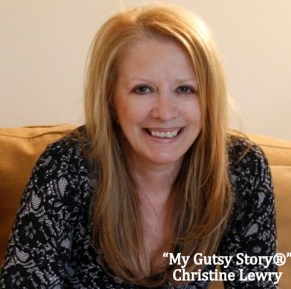
“My Gutsy Story®” Christine Lewry

January 14, 2013 by Sonia Marsh 23 Comments

 Christine Lewry

 “Thin Wire”

I felt the lump again. ‘It’s probably nothing,’ I said out loud. It wasn’t a hard lump but a knot of soft tissue under my arm. A wave of overwhelming doom made my knees buckle, I sat back on the bed.

I rang the doctors’ surgery. ‘Is it an emergency?’ the receptionist asked.

I thought for a moment. Is it?

‘Well … yes,’ I replied. She gave me an appointment for later that day. I wandered about the house, kept looking at the clock, didn’t get anything done.

‘I don’t think it’s anything to worry about,’ the doctor smiled. ‘But I’ll send you for a mammogram.’

My husband, Tony, came with me for the mammogram. We sat in a comfortable pink waiting room and read the newspapers. He made a cappuccino from the machine. The nurse’s hands were round and warm as she squeezed my breasts into the X-ray machine. ‘I’ll show these to Dr Wainwright,’ she said. I got dressed and returned to my newspaper – I didn’t want to look at the frightened faces of the other patients.

‘Doctor wants to do an ultrasound,’ the nurse with the warm hands said.

I lay on a narrow bed while Dr Wainwright squeezed cool gel on my chest and ran the ultrasound probe over it. The room was dark apart from the faint glow from her computer. Shadows fell on the walls like ghosts in the night.

‘There,’ she pointed to a haze of white on the screen. ‘I’ll do a biopsy, then we’ll organise a taxi to take it to the lab.’

Tony stayed home with me until the hospital rang. ‘Very sorry, but you have breast cancer.’ The words sounded so trivial and yet so profound and life changing. I tried to stay positive. Anyway, what could I do? Break down? Scream? I had to hold on tight to the belief that I was going to be alright.

The morning of my operation, Dr Wainwright and the surgeon gathered around my bed. ‘We’re going to do a larger operation than we originally planned,’ Dr Wainwright said. ‘We’ve decided to take the lymph nodes from under your arm, in addition to the lumpectomy. The lymph nodes are used to diagnose whether the cancer has spread outside the lump.’

I signed the form, leaving it to them to do whatever they thought might save me.

The next day my surgeon came to see me. He smoothed out the starched sheet and sat on my bed. ‘I’ve got the results of the lymph node biopsy. I’m afraid it’s bad news,’ he said. ‘Of the twelve lymph nodes I removed, six have cancer. I’ll arrange for you to see an oncologist. I expect he’ll recommend chemotherapy.’

I turned over and stared at the wall, waiting for Tony to arrive. My life was slipping away, like grains of sand falling through my fingers. The thought that I had cancer spreading through my body was terrifying. What if I died leaving my children without a mother? They were so young that there would come a time when they wouldn’t even remember me. I would be that photograph smiling back from the mantelpiece, a sad remnant of a woman who died long ago, never moved or put away since she left.

The oncologist talked in percentages and statistics, about improvements in life expectancy of five or ten years, his voice set in a monotone devoid of hope or compassion. What bloody good was five or ten years? I wanted to live, not wait it out. I wasn’t going to take on his fear or negativity.

The chemotherapy made me feel sick. I tasted its bitterness in the delicate lining of my nose and at the back of my throat. It made me feel like every cell in my body had been poisoned and that I had the most dreadful hangover, yet I hadn’t even had a glass of wine.

Mentally I had to pace myself. Six times, once every three weeks. I could manage that. I counted them off. Still, it was hard for me when all the hair on the top of my head fell out despite the torture of the cold caps. I always did care too much about my appearance.

Christine Lewry hair growing back
Christine Lewry hair growing back after chemotherapy.

‘Do you love me?’ I asked Tony whilst having the pinky-red chemotherapy dripped into my veins. The anti-sickness medication made me constipated for days and I became frail and weak. The more ill I became, the more I thought that if I died he might find a new wife; someone younger, thinner, better than me.

When my treatment finished, I was cast adrift. All the time I had been having hospital appointments, chemotherapy or radiotherapy I had been doing something positive to fight the disease. Now I floated about, waiting to see whether I would sink or swim.

I got myself a wig and went back to work.  The boss came in to speak to me – a rare man who emanated kindness. ‘I had cancer some years ago,’ he said. ‘It changed me, made me a better person. I know it’s hard but you’ll be glad one day you’ve been through this, it’ll change you too.’

I smiled and I looked away. What good could ever come from thinking you might die?

Sitting in my office in the late afternoon, I noticed the rain trickling down the window. The sky was grey and the darkness came on earlier than usual

I thought about what he had said, and realised that cancer had changed me. The whole experience had made me stronger inside, as if I could cope with anything. The money and possessions I had, all the stuff, it meant nothing to me. The only thing that mattered was the people I loved.

I had a feeling that some destiny awaited me; that my life was mapped out in some way, and maybe when that destiny caught up with me, I’d remember about the cancer and things wouldn’t seem so bad.

Christine Lewry Bio:

Christine Lewry lives in Hampshire, England, with her husband and two youngest children. She worked in the defence industry as a finance director for twenty years before leaving to write full-time. Thin Wire: A mother’s journey through her daughter’s heroin addiction (Amazon Kindle US) or (Amazon UK) (memoir) is her first book. She now hopes to write a novel.


Christine Lewry Book Cover


Please visit Christine’s website, follow her on Twitter@christinelewry, and on Facebook, and on Goodreads.
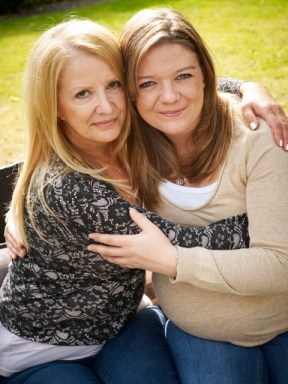
Chritine Lewry and her daughter
Amber, and me now (she’s pregnant in the photo, gave birth to a boy last November and she was the heroin addict)

Sonia Marsh Says: Christine, what an honest and open account of what it’s like to go through the various stages of cancer from detecting a lump, waiting for biopsy results, then surgery and chemotherapy.  I connected with you describing all the emotions you went through during the various stages. Your writing is open and honest and your positive message, made me realize that there are always lessons to be learned from every situation in life, even the ones we fear the most.

Do you have a “My Gutsy Story®” you’d like to share?

NOW is the time to submit your “My Gutsy Story®” and get published in our Anthology. Please contact sonia@soniamarsh.com for details.

You can find all the information, and our sponsors on the “My Gutsy Story®” contest page. (VIDEO) Submission guidelines here


“My Gutsy Story®” Mary Gottschalk

January 7, 2013 by Sonia Marsh 35 Comments

Mary Gottschalk

Welcome to Our New 2013 “My Gutsy Story®”  Series

“Giving Up the Illusion of Control”

“Can’t we just sail around the world now, instead of waiting until we’re retired?”

My story begins with that simple question to my husband Tom, posed on a snowy February night in 1985.

The answer seemed an obvious “no.”  At age 40, we both had successful careers in high finance. My success was all the more significant as a woman in what was still very much a man’s world.  Abandoning the career I’d worked so hard to build seemed crazy.  After five years at sea, I’d be approaching 45 and totally out of touch with the ever-innovative financial markets.  The odds of getting back into that competitive world would be perilously small.

But something didn’t feel right.  Tom and I both worked long hours, week in and week out.  We had no time to enjoy the fruits of our success. Life seemed to passing us by.

And so, Tom and I held hands and jumped off the corporate ladder. Barely seven months later, we headed out of New York Harbor on a 37-foot sailboat en route to the rest of the world.

Almost nothing on that voyage worked out as planned.  But what I learned, as I recounted in Sailing Down the Moonbeam, is that sailing is a metaphor for life. The route is not well marked.  You can’t control your environment.  All too often, you end up somewhere other than where you intended to go.  As Ted Turner famously noted, there’s no point in worrying about the wind; the only thing you can do is adjust your sails.

It was a lesson I learned early in the voyage, and it changed my life almost at once.  But the way that lesson applied to my career was not apparent until years after the voyage ended.  That is the story I will share here.


I began my professional life as a researcher and problem solver for companies with financial exposure to interest rates, currencies and commodity prices. I loved the work, which appealed to my analytical nature.  It seems I was good at it and I moved steadily up the corporate ladder.  But with each move, I was spending more time managing people and their schedules, and less time doing what gave me a sense of satisfaction.  A nagging concern about my ability to master the job I’d been promoted into—I hated routine and didn’t think I was a very good people manager—was a significant factor in my decision to leave on that sailboat.

At the time, I felt I was running away from a looming sense of failure.  But as the analogy between sailing and real life began to rise to my consciousness, it struck me that during those last few years in New York, I’d been trying to control the metaphorical wind … trying to make my career go in a direction that my introverted, analytical persona was not designed to go.

With the realization came an understanding of what I wanted, what I was willing to do— when and if I returned to the work-a-day world. I liked research and problem solving.  I didn’t like jobs with routine and repetition.  I didn’t want to manage people.  I didn’t want to waste energy trying to be good at what other people thought I should do.

With that insight came another. Fancy titles and big salaries mattered far less to me than having an interesting job in which I could continue to learn and grow.  As I thought back over my career, the jobs I had loved most had constant variety with little or no managerial routines, as well as the opportunity to learn even as I used my analytical skills to help others.  It was the classic consultant role.

It was easy enough, sitting on the deck of my sailboat, to say what I wanted.  But what if the world didn’t care what I wanted?

And for a time, it seemed the world didn’t care.  When I did go back to work, I started out as a mid-level financial consultant in Auckland, New Zealand, much lower in the pecking order than I’d been when I left New York.  Within four years, however, I was running the financial risk management practice for Peat Marwick in Australia.  In 1994, Arthur Anderson recruited me to return to New York.  In 2000, I was appointed Chief Financial Officer of one of the twelve Federal Home Loan Banks.

Although I didn’t seek them out, promotions and handsome salaries came my way.  It was like being paid to go to school.  It seems that what mattered was not being good at everything, but focusing my energy and attention on doing what I loved and was good at.


With the benefit of hindsight, a career decision that initially looked like a “gutsy” thing to do seems to have been the safer course of action.  In New York, every rung on the corporate ladder is a stop on the road to somewhere above. If you don’t move up, you’ll get pushed off.  I have no doubt that, had I stayed on that management track in New York, I would eventually have been pushed off by someone who loved managing people in a way that I did not.

My point is not just that I took a risk and it worked out.  My point is also that doing what is expected, following the conventional path may, in reality, be the riskiest choice of all.  We all know people who stayed in jobs they didn’t enjoy just because they thought the job was safe—and lost their jobs in the last recession.

I often wonder what would have happened if I hadn’t gone sailing. Would I have stayed in a miserable job? Perhaps not. But if all I did was change jobs in the competitive, high pressure world of New York, I would not have learned the lesson I absorbed as I crossed the Pacific Ocean … that you can’t control your environment … that you can only control how you respond to it.  Given that reality, you might as well spend your time doing what you love.

Go for it!

 ***

Mary Gottschalk Bio:

Mary has made a career out of changing careers.  After finishing graduate school, she spent nearly thirty years in the financial markets, as an economist, a banker and a consultant.  Her work took her to New York, New Zealand, Australia, Central America, Europe, and amazingly, Des Moines, Iowa.

Along the way, she dropped out several times.  In the mid-1980’s, Mary and her husband Tom embarked on the round-the-world sailing voyage that is the subject of her memoir, Sailing Down the Moonbeam. Several times, she left finance to provide financial and strategic planning services to the nonprofit community, both in New York and Des Moines.

In her latest incarnation, she is working on a novel, writing for The Iowan magazine, and lecturing on the subject of personal risk.

 Mary Gottschalk book cover

Mary has two websites which you can view here and here.

Please join her on Twitter and Facebook, and her memoir, Sailing Down the Moonbeam  is available on Amazon.

***

 Sonia Marsh Says:

“Abandoning the career I’d worked so hard to build seemed crazy,”

and yet, this is what you did. I find it amazing that stepping out of the corporate world into a world where nature is your boss, can give you clarity, and make you realize what’s important in life. You state the message you learned with such clarity:

“that you can’t control your environment … that you can only control how you respond to it.  Given that reality, you might as well spend your time doing what you love.”

Many of us need to hear your message to get the courage to take a risk, rather than staying in a situation we’re not happy with.

Do you have a “My Gutsy Story®” you’d like to share?

NOW is the time to submit your “My Gutsy Story®” and get published in our Anthology. Please contact sonia@soniamarsh.com for details.

You can find all the information, and our sponsors on the “My Gutsy Story®” contest page. (VIDEO) Submission guidelines here


Are you Gutsy enough to give a stranger a “Free Hug”?

December 25, 2012 by Sonia Marsh 2 Comments

Free Hug Man

I’m spending a mini-vacation with my husband in Ojai, California, and met this “Gutsy” man at the Farmers’ Market on Sunday morning.

He seemed friendly and gentle, so I had to find out:

Why was he offering “Free Hugs?”

After we hugged, I had this burning desire to interview him. I needed to find out the: who, what, where, when and why?

The first thing he said was,  “I have the best job in the whole world.”

Sonia receiving a free hug-001
Sonia getting her “Free Hug” in Ojai, California.

That struck me as odd, and I started thinking, “Is he getting paid to hug?” if so, am I supposed to donate money. I don’t see a hat or a box on the ground for collecting coins, besides it does say, “Free Hugs.”

Something strange happened to me during our hug. I started thinking how one simple hug can connect two strangers. Imagine if we could start a hugging revolution, and transform the world.

There’s something special about a hug; it bonds humanity.

After receiving a warm hug, I asked him more questions.

“I hear so many stories from people I hug,” he said.

“Can you give me one example,” I asked, always looking for a good story.

“This morning a woman collapsed on my shoulder and told me her husband passed away last Wednesday. She said she longed for a human touch.”

I thought about how this man shows up every Sunday from 10am-1pm to comfort lonely people, some who are grieving, others who are longing for a human to show they care. He does have an important “job.”

The man told me there’s a worldwide movement to give, “Free Hugs” and that I can Google it. So I did when I got back to my room at the Blue Iguana Inn.

100_0684
The Blue Iguana Inn, Ojai, California.

I found this video, and explanation of the “Free Hugs”  worldwide movement.

 The Free Hugs Campaign is a social movement involving individuals who offer hugs to strangers in public places.[1] The hugs are meant to be random acts of kindness – selfless acts performed just to make others feel better.

I think you have to be “Gutsy” to stand on a street and offer “Free Hugs.”

Are you Gutsy enough to give a stranger a “Free Hug”?

Merry Christmas to all of you.

My Christmas gift was a nice surprise from the London Book Festival, where my memoir received an honorable mention under Biography/Autobiography

Interview with Memoir Author Madeline Sharples

December 6, 2012 by Sonia Marsh 18 Comments

Madeline Sharples

It’s my pleasure to introduce you to a fellow memoir author friend, Madeline Sharples, who wrote: Leaving the Hall Light On: A Mother’s Memoir of Living with Her Son’s Bipolar Disorder and Surviving His Suicide.

Madeline is on her virtual book tour, and I had the pleasure of becoming her friend and meeting her in person, at her home in Manhattan Beach, as well as at the Hollywood Book Fair.  I wrote a review of her book on Amazon and Goodreads, and decided to ask her a few questions which intrigued me about her honest memoir. But first, a brief synopsis of her memoir.


Leaving the Hall Light On: A Mother’s Memoir of Living with Her Son’s Bipolar Disorder and Surviving His Suicide charts the near-destruction of one middle-class family whose oldest son committed suicide after a seven-year struggle with bipolar disorder. Author Madeline Sharples goes deep into her own well of grief to describe her anger, frustration and guilt. She also shares the story of how she, her husband and younger son weathered every family’s worst nightmare—including struggles with her own thoughts of suicide, and ultimately, her decision to live and take care of herself as a woman, wife, mother and writer.

  • “A moving read of tragedy, trying to prevent it, and coping with life after.” Midwest Book Review
  • “Poetically visceral, emotionally honest.” Irvin D. Godofsky, M.D.
  • “Moving, intimate and very inspiring.” Mark Shelmerdine, CEO, Jeffers Press

My Questions and Madeline’s Answers:

1.     What were the warning signs when your son first began to experience symptoms of bipolar disorder? (Anything at all happen during childhood that was different?)

Just before his first manic break in February 1993, he had traveled from New York where he was attending college at the New School to attend my mother’s 85th birthday celebration. I have a wonderful photo of him playing Happy Birthday on the piano with her sitting beside him. He was perfectly normal. He was calm, loving. He talked easily to everyone and readily smiled as he posed for a photo with his brother and cousins. For the two nights he was with us, he slept easily in his childhood bedroom, and kissed and hugged me when I said goodbye to him at the airport.

Two weeks later he was calling us up every few minutes, writing all over his apartment walls with a blue felt-tipped marker, and saying people were lurking in doorways out to get him and poisoning his food and cigarettes. His clothes were strewn all over the place, his dishes were stacked up—all behaviors so foreign to the orderly and neat guy he normally was. Most important, he was a jazz musician no longer able to sit still long enough at the piano to play a song through from the beginning to end.

In those two weeks after he returned to New York City, he played three successive gigs with some older musicians in Brooklyn, rather than with his own group, and had not slept for at least two nights in a row. He also drank heavily during these performances. So it is possible that this burgeoning jazzman lifestyle of little sleep, little food, and lots of booze sent Paul over the edge. He was also so affected by the news of the heroin-overdose death of one of his classmates he became unintelligible and had to be taken from his school to the hospital.

Paul was born with his third and fourth fingers connected on both hands. And because he was trying to separate them himself, we decided to have hand surgery performed just after he turned two. He had a scary time in the recovery room and had to wear casts that looked like boxing gloves for ten days afterward. As a result he had to quit sucking those fingers cold turkey. A few other events when he was two come to mind: we moved, his brother was born, and his beloved grandfather became very ill with cancer so he couldn’t play with him anymore. Later on in Paul’s teens he had an affair with a much older woman. I think the effect of that affair might have been a factor in how he related to women afterward.

2.     How do you give support and comfort to a person who doesn’t want support or comfort?

We were in a hopeless situation. Because Paul was an adult child, we had no control. We couldn’t help him unless he let us. We felt like our hands were tied behind our backs—and by him. Paul was the driver—it was all up to him. We were out of touch and out of control at his choosing. All we could do was hope for the best, that somehow he would integrate what everyone had been telling him for so long—that his survival and recovery were up to him.

At the same time we concluded no matter what, he was our son and our responsibility. We would never turn him out into the streets. No matter how painful it was being with him, having him living with us, experiencing the effects of his illness on him and our family, we would take care of him for as long as he needed us to.

3.     How did you maintain your sanity (during) and after your son’s suicide?

A long list of things helped: friends and family, getting back on my exercise program, pampering myself, writing in my journal and taking writing workshops, attending the Survivors After Suicide meetings at the Didi Hirsch Mental Health Services organization, finding a job outside my home, and being respectful of each other as a family. We stuck together as a family, we moved through our grief in our own way and in our own time, and we came out the other side as a family closer than ever before.

4.     Did your marriage suffer as a result of your son’s bipolar disorder and suicide? So many couples end up divorcing, you didn’t how did you manage that strength between you?

At first we had a hard time just being together because our grieving methods and coping mechanisms were so different. My husband would keep saying that I needed therapy. To spite him, I wouldn’t go. That is the truth of it. He was afraid I was having a breakdown; I was afraid he was drowning his pain and anger in alcohol.

Yet, I think the main reason we survived Paul’s death at all was because of the strength of our marriage.

According to Bob, our marriage survived by a combination of my persistent drive to deal with the pain, suffering, and loss, and his willingness to wait until I got better. We realized early on that our grieving processes were different, so we were patient with each other about that. We also give each other a lot of space. We respect each other. We both are good at what we do professionally so there’s no competition or jealousy there. We have no reason to put each other down. We don’t get into arguments about the small stuff or let the small stuff get in our way. We’ve lived through too much big stuff to let that happen.

This love has also been the glue that has kept us together—a glue stronger than the trauma of Paul’s death. It was enough to help us in the most trying of times that a couple could ever go through. Plus neither of us has any other place to go. We’re together in it for the long haul—richer, poorer, sickness, health, and a son’s death.

5.     What can a person do to help and comfort a family that has experienced a suicide or other tragedy? What is the best approach when you speak to a mom who has gone through what you went through?

I don’t know if this is the best approach, but here is what I would suggest. Of course offer condolences, and explain that even though we have both been through this experience, I would have no way of knowing how you feel. Everyone grieves in her own way and for however long it takes. Everyone has a different reaction to what comes her way. I would make sure the mother has permission to grieve – to cry, to laugh, to do what it takes to express her emotions. I would also suggest taking good care of herself – get some exercise, eat healthy, get pampered, buy a new dress, go to work, find a creative outlet. Looking good will help you to feel good. And even if you don’t feel good, pretend. Pretty soon you won’t have pretend.

Also, feel free to reject everything I’ve suggested. These are things that helped me, but that doesn’t mean they’ll work for you.

And, most important, I would tell her to not let anyone tell her how long or how to grieve. So many people told me it’s time to move on already. But what did they know? Grief is so personal it must be respected and allowed to run its true course.

6.     How did your elder son’s illness and suicide affect your thoughts toward your younger son? Did Ben ever feel left out and not as loved?

It’s all about Ben now. He was my younger son. Now he’s my only son, the person I worry about the most. I think of all the disasters that could happen whenever he travels—by car, by plane, and even on foot. On days when I fear he is in danger, my heart and gut react more than ever. Now I try to hide my worries about him as best I can. After all, he is a grown up and has a wife to worry about him now. But still….

Some time ago I wrote that Ben is the reason I chose to live when I was most despondent after Paul died. That is still true. There is nothing I wouldn’t give him or do for him. Even before Paul died that was so. He and I spent so much time together as he was growing up. I was his first tennis teacher and warm-up partner, and I took him to all the tennis tournaments he competed in from the time he was seven until he graduated from high school. I worked with him on his tennis attitude such that he had a reputation for being the “Iceman” on the courts. I helped him through his losses, his nervousness before a match, his strategizing, and his triumphs.

Now I am the champion of his career. He comes to me for advice and I readily give it. He comes to me for editorial suggestions on the scripts he writes. And even though he doesn’t come to me for monetary help anymore, I would still readily give that to him too.

I don’t think Ben felt left out or not as loved during Paul’s illness or after his death. However, he had a hard time believing the behavior Paul displayed during his manic episodes were a result of his illness and not just his moodiness. So Ben stayed away a lot during those years. He just didn’t like being around his brother whom he loved very much after Paul got sick.

Sonia’s Extra Questions:

a) As a mom who has an 18-year-old son joining the Army and wanting to fight in a war, what advice do you have for us:

Not to fear the worst.

I think I can understand your fear. I have that fear about losing Ben even though there is no chance of his going into the military now because he’s too old. However, the thought of my child in danger of any kind brings out my worst fears. Of course, Ben thinks I’m silly, but I tell him I’m a mother, and that’s what mother’s do. Mothers worry.

b). What do you think is different for a mom who looses a child who is killed at war, than one who commits suicide?

Even though one could rationalize that one died while serving his country and the other died for naught, I think a mother will suffer from the death of her son no matter how it happened. Losing a child, not the way the child died, is the

Author’s Bio:

Madeline Sharples is an author, poet, and web journalist who spent most of her professional life as a technical writer and editor, grant writer and proposal manager. Through the tragedy of her son’s mental illness and suicide, she has become a thought-provoking expert on the affects of mental illness and suicide on family members—and, more important, on how to keep the surviving members of your family together and move forward in the aftermath of tragedy.

Madeline Sharples studied journalism in high school and college and wrote for the high school newspaper, but only started to fulfill her dream to work as a creative writer and journalist late in life. Her memoir, Leaving the Hall Light On: A Mother’s Memoir of Living with Her Son’s Bipolar Disorder and Surviving His Suicide, was released in a hardback edition in 2011 and has just been released in paperback and eBook editions by Dream of Things. It tells the steps she took in living with the loss of her oldest son, first and foremost that she chose to live and take care of herself as a woman, wife, mother, and writer. She hopes that her story will inspire others to find ways to survive their own tragic experiences.

She also co-authored Blue-Collar Women: Trailblazing Women Take on Men-Only Jobs (New Horizon Press, 1994), co-edited the poetry anthology, The Great American Poetry Show, Volumes 1 and 2, and wrote the poems for two photography books, The Emerging Goddess and Intimacy (Paul Blieden, photographer). Her poems have also appeared online and in print magazines.

Madeline’s articles appear regularly in the Naturally Savvy, PsychAlive, Aging Bodies, and Open to Hope. She also posts at her blogs, Choices and at Red Room and is currently writing a novel.  Madeline’s mission since the death of her son is to raise awareness, educate, and erase the stigma of mental illness and suicide in hopes of saving lives.

Madeline and her husband of forty plus years live in Manhattan Beach, California, a small beach community south of Los Angeles. Her younger son Ben lives in Santa Monica, California with his wife Marissa.

You can purchase Madeline’s memoir here at Red Room ,  Amazon or Dream of Things

Take a look at Madeline’s moving book trailer.

Join Madeline on Facebook and Twitter:@madeline40

Madeline blogs here and here, and also has her website.
I hope you read Madeline Sharples memoir, and thank her for answering all my questions. Please leave your comments for Madeline below.
 DECEMBER IS DIFFERENT.

Next Monday, December 10th, I shall be posting from Paris. I plan to share stories and photos, from Paris and London, where I am doing an event on December 13th.

I am collecting new “My Gutsy Story” submissions for 2013.  NOW is the time to submit your own “My Gutsy Story” and get published in our Anthology. Please contact sonia@soniamarsh.com for details.

To submit your own, “My Gutsy Story” you can find all the information, and our sponsors on the “My Gutsy Story” contest page. (VIDEO) Submission guidelines here.

Thanks and don’t forget to VOTE for your favorite November “My Gutsy Story” on the sidebar.


Vote for your favorite November “My Gutsy Story”

November 29, 2012 by Sonia Marsh 1 Comment


This month he have 4 amazing “My Gutsy Story” submissions.

Please vote for your favorite story. You have until December 12th to vote, and the winner will be announced on December 13th from Paris where I shall be doing a book signing at WH Smith.


SCROLL DOWN ON SIDEBAR TO VOTE. Only ONE vote each.

Jerry Waxler  shared “My Search Led Me to Story,” and his global vision of sharing our stories and breaking down barriers through a Memoir Revolution.

Jerry Waxler

Elaine Masters shared her story about “Answering the Call” where she got the strength and courage to leave your “unhappy” marriage and find a new life.

Elaine Masters

Susan Weidener: shared “Taking a Risk on Love,” a story of courage and re-inventing herself after the loss of the man  she loved, and how she was able to start a new life.

Susan Weidener

Jerry Holl: An amazing “My Gutsy Story” about one man, one bike and one tent. Jerry quit his job at 57 to experience a life-changing adventure.


Jerry Holl


Do you have a “My Gutsy Story” you’d like to share?
DECEMBER will be DIFFERENT.

I shall be leaving for Paris and London, and plan to share stories, photos, and other posts during this month on my blog.

I am collecting new “My Gutsy Story” submissions for 2013.  NOW is the time to submit your own “My Gutsy Story” and get published in our Anthology. Please contact sonia@soniamarsh.com for details.

To submit your own, “My Gutsy Story” you can find all the information, and our sponsors on the “My Gutsy Story” contest page. (VIDEO) Submission guidelines here.

Thanks and don’t forget to VOTE on the sidebar.


« Previous Page
Next Page »
  • Facebook
  • Instagram
  • LinkedIn
  • Pinterest
  • Twitter
  • YouTube

Sign up for my Gutsy Updates

Sign up to receive awesome content in your inbox, every month.

We don’t spam! Read our privacy policy for more info.

Check your inbox or spam folder to confirm your subscription.

Welcome to My New Life

Welcome to My New Life

Do you feel trapped?
Let me Help You Rediscover Your Freedom.
I divorced at 58, and now belong to myself.
If I can do it, so can you!
Let me help you find your purpose and become your own best friend.

Click the cover to buy on Amazon

Recent Posts

  • Do You Really Want to Live to 120? The Truth About Healthspan vs. Lifespan
  • I’ve Forgotten How to Drive — My Tesla’s Drives Better Than Me
  • Why I Quit Dating Apps at 68—And My 35-Year-Old Son Has the Same Problem

Also Available At:

Latest from the blog

  • Do You Really Want to Live to 120? The Truth About Healthspan vs. Lifespan
  • I’ve Forgotten How to Drive — My Tesla’s Drives Better Than Me
  • Why I Quit Dating Apps at 68—And My 35-Year-Old Son Has the Same Problem
  • Solo Cruising Doesn’t Mean You’re Alone
  • Single Woman Cruising Solo

Top Posts

  • From Rice and Lentils to Salmon and Champagne
  • "My Gutsy Story" by Rebecca Hall
  • My Road to Becoming an Author by Jonathan Yanez
  • My First Basotho Funeral
  • Do You Really Want to Live to 120? The Truth About Healthspan vs. Lifespan
  • Privacy Policy

Copyright © 2026 · Beautiful Pro Theme on Genesis Framework · WordPress · Log in

Loading Comments...