
After living in Lesotho for almost a year, I have experienced two cases of overprescribed medication and agree with the results of a new study that shows that:
“Doctors in sub-Sahara Africa generally prescribe more drugs than the number recommended by the World Health Organization.” published in the BMC Public Health Journal,
I have experienced two cases of individuals who were given 4-5 medications, and one injection for:
1). A cold
The seventeen-year-old daughter of my host family during Peace Corps training woke up with a cough, and what appeared to me to be the common cold. She did not want to miss school so on her way, she stopped at one of the new clinics built by American donor funding, and was given five plastic bags of different medications, including an antibiotic, plus one injection.
The following day, I asked her if she felt better, and she said, “No.”
I asked her if she saw a doctor, and she replied, “There are no doctors at the clinic.”
2). Allergies/Hay fever
A fourteen-year-old girl at my school could not keep her eyes open during my English class. She said she had allergies and both eyes were swollen with tears streaming down her cheeks. She used her sleeve to wipe them away.
I could tell she was in pain, and asked if she had medicine to take.
“Yes, teacher,” she said. “The clinic gave me an injection and four medicines.”
“Aren’t they helping?”
“No teacher.”
“Come with me and I’ll give you some drops to clean your eyes.”
“Thank you teacher.”
She told me she lived with her grandma, and as I held onto her elbow so she wouldn’t trip over the rocks, I wondered if she was an orphan.
“Here put on my sunglasses.”
She could barely open her eyes, and I wasn’t sure whether to speak to her, or to remain quiet during our fifteen-minute walk home.
Inside my rondavel, I told her to lean back on my pillows so I could place a few drops of “Refresh tears” into her eyes, to flush out any pollen, or other irritant.
She didn’t seem to feel better, so I gave the special Milky Way bar I’d been saving for when I needed to give someone a treat. As with all children at my school, they rarely get candy, so she nibbled it so it would last.
She sat on my couch looking miserable. I found my Peace Corps medical kit wondering if I had any medication for allergies. I’d forgotten I had antihistamines, and was so happy to give her a few pills. She took one, trusting me completely, and after twenty minutes or so, her eyes were dry. They still hurt, but she wanted me to show her my photos on my laptop. I was so happy to make her feel better.
3). High blood pressure
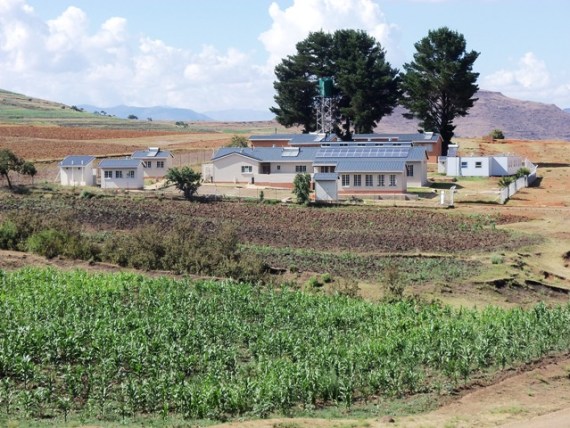
I visited a beautiful clinic built with American donor funding. I was invited to speak to the nurses, even while they were attending to patients.
A woman needed her blood pressure checked to renew her medication, and the nurse told me:
“The blood pressure cuff doesn’t work; the batteries are dead.”
“Don’t you have a manual one?” I asked.
“No.”
At least fifteen patients lined up for their small plastic bags of pills, which are then put into a brown paper bag. When I asked my host mother if the person counting the pills was a pharmacist, she replied,
“No. She just helps.”
I listen to BBC World News daily, and on August 22nd, 2016, (Scroll down) they talked about the study published in the BMC Public Health Journal, which stated:
“A new study has found that doctors in sub-Sahara Africa generally prescribe more drugs than the number recommended by the World Health Organization.
The study, published in the BMC Public Health Journal, reveals that a patient seeking treatment in the region is likely to be asked to take more medicine than they should ideally be given leading to misuse or overuse of drugs.
The researchers also found that half the time, one is likely to be given an antibiotic, often, without being tested.”
From the three examples I’ve come across, this is happening in Lesotho, and as far as the clinics I’ve visited, there are no doctors, only nurses, and the one time I saw the woman dispensing medication, she was not a qualified pharmacist.
This is a huge problem as far as I can see, not only in terms of a waste of “free” medication, but also dangerous to the patients, in terms of adverse effects.
